
A Society Between Two Dead Ends
The Caves of SteelFastolfe’s theory that Earth and the Outer Worlds face opposite crises reshapes the murder investigation into a question about humanity’s long-term survival.
increasing Bearing strength in each event
 decreasing
Bearing strength in each eventdecreasingEarth’s Overcrowding
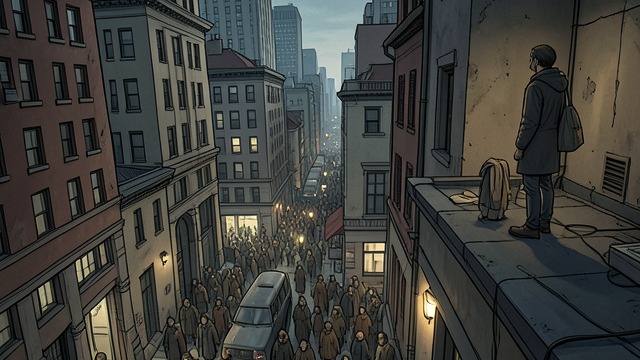
Earth’s Overcrowding
Efficiency forced by numbers
As Earth’s population grew, open towns were absorbed into immense Cities, and food production shifted toward yeast and hydroponics. The transformation kept people alive but narrowed their choices.
A future limit
Baley understands that calories, minerals, water, and energy may not keep pace indefinitely. The City’s success postpones scarcity while binding people more tightly to complex systems.
Survival has become a problem of scale.
The Outer Worlds’ Stagnation
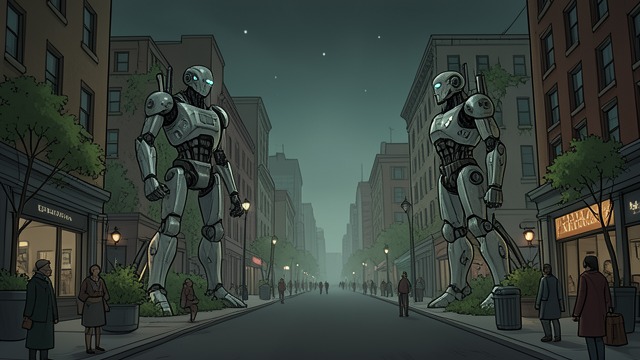
The Outer Worlds’ Stagnation
Comfort without expansion
The Outer Worlds maintain low populations, long lives, and extensive robot labor. Their societies are comfortable but have not established new colonies for centuries.
Stability becomes confinement
Fastolfe argues that long lives and security make people reluctant to risk new settlement. Their problem is not scarcity but a lack of motion and ambition.
The apparent alternative to Earth is itself vulnerable to decline.
Two Failures Compared
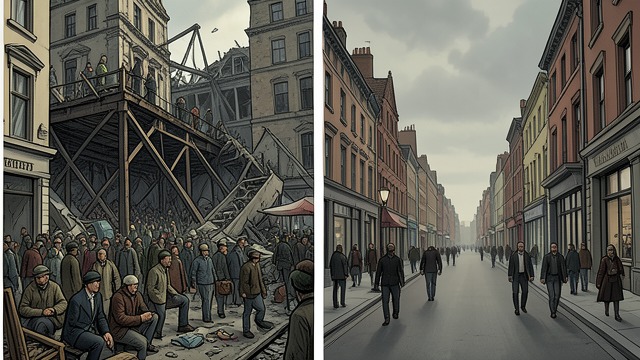
Two Failures Compared
Contrasting dangers
Earth faces overcrowding and brittle infrastructure; the Outer Worlds face stagnation and declining willingness to colonize. Neither civilization can simply claim to be a model for the other.
A reciprocal need
Fastolfe imagines that Earth’s cooperative habits and Spacer technology might combine in new societies. The proposal values exchange rather than conquest, though it is still shaped by Spacer power.
The comparison makes mutual learning essential and politically difficult.
The Colony as Synthesis
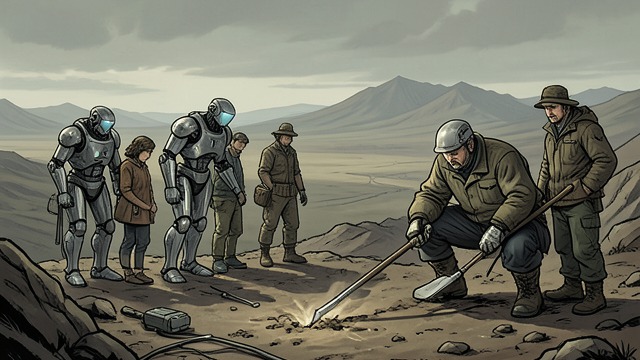
The Colony as Synthesis
A different inheritance
Baley argues that new colonies would not simply reproduce the older Outer Worlds. Settlers would carry the cooperative background of the Cities while adapting robots to new conditions.
A future beyond either model
The hoped-for society would avoid Earth’s enclosure and the Spacer world’s overcaution. Whether it can do so is not established, but the idea gives colonization a social purpose beyond relieving population.
A new world becomes a test of human adaptability.
An Uncertain Inheritance
An Uncertain Inheritance
Responsibility across generations
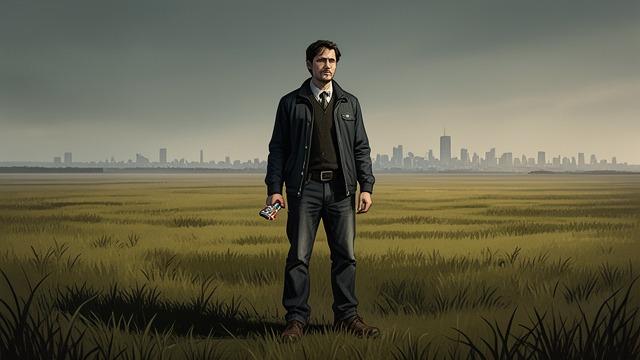
Baley cannot solve Earth’s demographic future in one case, but he can imagine his son taking part in a wider project. Bentley’s generation may inherit choices unavailable to his father.
Hope kept provisional
Daneel offers no guarantee that the schools or colonies will exist. Baley’s hope depends on political change, human courage, and cooperation between people and machines.
The novel closes with a possible future rather than a promised one.
During Baley’s reflections on City history
During Fastolfe’s explanation of Spacer society
Late in the conversation in Fastolfe’s dome
During Baley’s argument with Clousarr
At the conclusion, when Baley thinks of Bentley
